

Modular Education Market Size & Forecast
As schools, colleges, and universities around the world work to expand capacity, modernize aging facilities, and respond to changing enrollment needs, modular construction is providing education leaders what conventional building methods often cannot: dramatically shorter project timelines, greater cost predictability, and the flexibility to adapt as needs evolve. Whether used for permanent classrooms, laboratories, student housing, administrative space, or temporary swing space, today’s modular education buildings are more flexible, scalable, and efficient than ever before.
In fact, according to MBI's 2026 United States Permanent Modular Construction Industry Report, education remains one of the most established markets for permanent modular construction, with continued demand expected as institutions seek faster, more reliable ways to deliver high-quality learning environments.
Specifically, MBI expects the permanent modular education market to grow at 4.2 percent CAGR over the next five years with a market size of $3.8 billion by 2029.
Modular Classroom Applications
MBI members are delivering modular classrooms and education facilities across the full spectrum of project types — from entire schools and early education centers to temporary and relocatable classrooms.

Primary/secondary schools
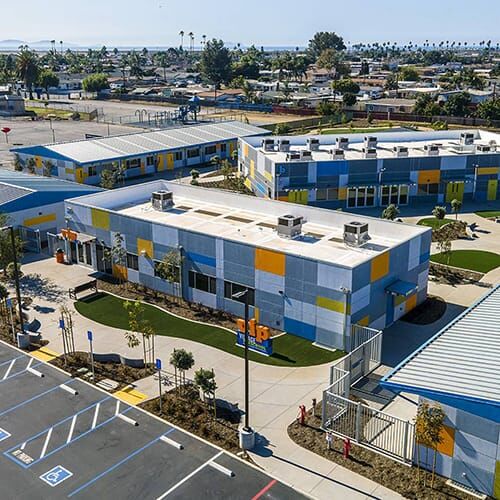
Preschool & early education
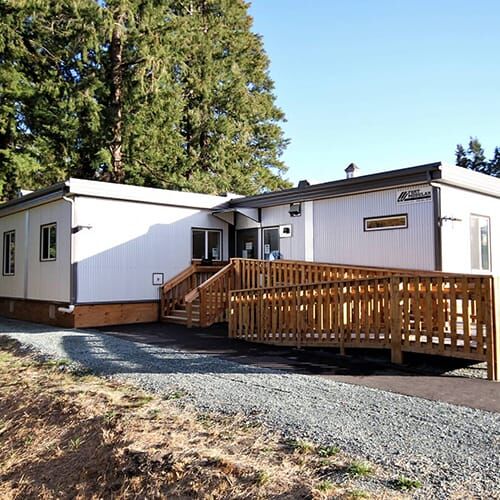
Jobsite daycare
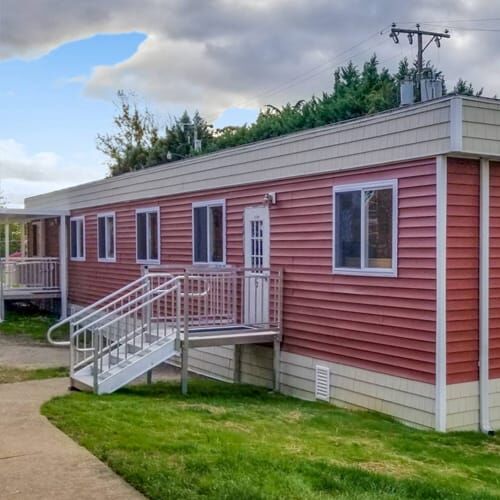
Relocatable classrooms
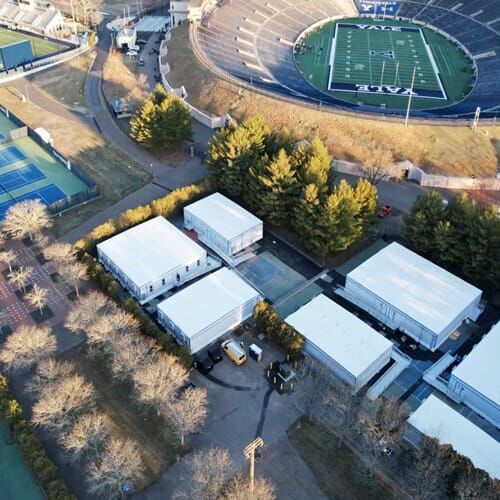
Sports training facilities
Explore Modular Education Projects Around the World
Use this interactive map to learn more about modular schools and classrooms built by MBI members across the globe.
Benefits of Modular Construction for Schools & Classrooms
As school districts, colleges, and universities face rising enrollment, aging infrastructure, and growing pressure to serve more students quickly, modular construction offers a practical alternative to traditional educational building methods. By shifting much of the construction process into a controlled factory environment, modular projects can reduce schedules, improve cost certainty, and limit disruptions to active campuses. From permanent classrooms and laboratories to administrative offices and temporary facilities, modular buildings can support both the immediate needs and long-term growth of schools of all kinds.
Speed to Occupancy
Site work and module fabrication happen simultaneously, compressing timelines that would could last 18–24 months into as few as 9–12. That's treatment and revenue-generating capability, faster.
Predictable Budgets
Factory production insulates modular schools and classrooms from the labor shortages and material volatility that plague site-built work. Costs are locked earlier, surprises are fewer.
Consistent Quality
With highly-repeatable units, modular education projects can be built to the same specifications, in the same environment, by the same crews — inspected at the factory before they ever reach the site. Less rework. Tighter tolerances.
Reduced Site Impact
Fewer trucks, less noise, less debris. For many permanent and temporary education projects, minimizing site disruption isn't just courteous — it's needed to keep schools open and active.
Scalable Units
From temporary classrooms to permanent schools, modular delivery scales across product types without sacrificing quality or design flexibility.
Built Sustainably
Tighter building envelopes, reduced site waste, and the ability to integrate energy-efficient systems at the factory level give modular schools a measurable sustainability edge.
Emerging Trends and Future Potential
The future of school construction is increasingly modular. Advances in design, technology, and building materials are making modular schools more versatile and better equipped to meet the changing needs of districts, educators, and students. From temporary classrooms that address immediate capacity shortages to permanent schools, laboratories, and specialized learning spaces, modular construction offers a scalable and adaptable solution that can evolve alongside enrollment, curriculum, and community needs.
The Value of Modular Construction
By offering speed, cost-efficiency, and sustainability, modular building techniques stand out as a critical solution for the challenges facing education infrastructure today. As MBI members continue to innovate and push the boundaries of what is possible, the role of modular construction for schools and classrooms is set to grow even further. We invite readers to explore more about how MBI and its members are leading the charge in educational space innovations, paving the way for a healthier, more prosperous future.
Explore Modular Education Articles & Case Studies
The following projects highlight modular's presence in the education sector
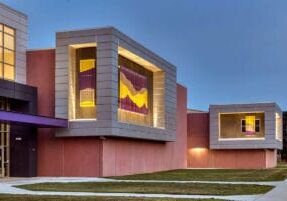
Painted, Perforated Panels Provide School with Pulled-Together Polish
The Williamsville-Sherman Community Unit School District No. 15 serves students from its namesake villages on the outskirts of Springfield, IL. To bring life to two school buildings, bright school colors were applied2,200 sq. ft. of PAC-CLAD 7.2 Perforated Corrugated panels.
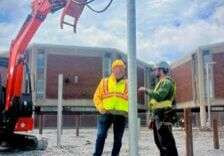
Du Moulin School
When the Lanaudière school board approved a new modular expansion for Du Moulin School, the expectations were clear: The project needed a foundation system that could match the pace of modular construction while delivering absolute confidence in weak ground.
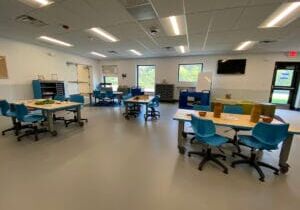
Modular Childcare for One Client in Two Locations
Despite their differences, both facilities share a common program and design intent. Each includes classrooms, a Movement Matters studio, a STEAM-focused learning lab, and a fully electric commercial kitchen.
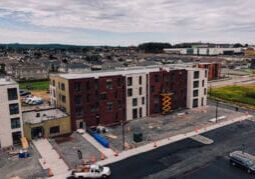
UTILE: Putting Modular Building on a Fast Track
In Quebec, UTILE is taking the lead in creating affordable modular buildings to help decrease the student housing shortage. During the process, the company discovered what it takes to make the transition to modular building a success.
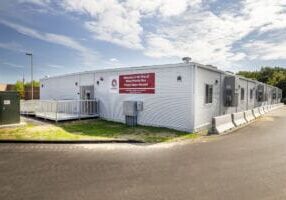
Manchester Public Schools Temporary Classroom Space
The buildings can accommodate up to 1,000 students during construction of permanent buildings, allowing education to proceed without interruption. The modern and fully equipped modular learning spaces ensure a smooth transition for both students and staff.
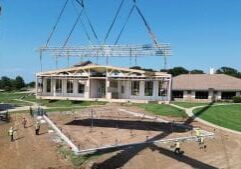
Offsite Modular Construction Builds and Installs 12 New Classrooms for Westlake Academy in 100 Days
OMC utilized modular construction techniques to manufacture two brand new permanent 6,400-square-foot modular buildings, each housing six classrooms. The process included innovative design features for safety, durability, environmental sustainability, integrated technology enhancements, and health-oriented construction.
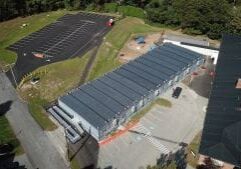
Parkhurst Elementary School Classroom Additions
The Parkhurst Elementary School in Winchester, MA, has recently undergone an expansion of 13,074 square feet. Due to renovations at the neighboring Lynch School, students were temporarily relocated to Parkhurst. Modular construction was chosen as the preferred method to accommodate the influx of students and prepare for the start of the 2023-2024 school year.
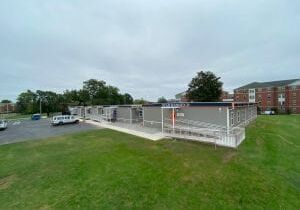
University Temporary Modular Student Housing— Ettrick, VA
Modular Genius, Inc. designed and built three temporary modular dormitory complexes featuring 134 dorm rooms, totaling 49,632 sq. ft. All three modular dorms feature a shared laundry room, kitchen and lounge area, showers, and restrooms for residents.
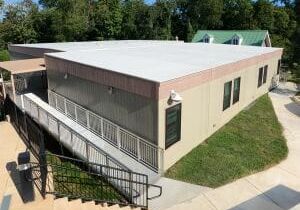
Hearst Elementary School Case Study from Wilmot Modular
Wilmot Modular was hired to consult and provide what was originally a two-story classroom expansion project. The school district wanted the building to match nearby
buildings on the campus, and fit in a steeply graded, small site. There were also budget constraints that had to be managed.
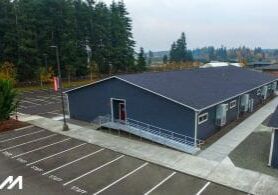
Modern Building Systems- 8 Classroom Complex
Yelm School District desired a practical and temporary 8,200 square foot classroom solution, all under one roof, to house their growing student population.
Find a Modular Builder for Your Next School Project
MBI members include the most experienced modular manufacturers and
contractors across the globe — all vetted, all ready to deliver.