Observations from My Travels to Ukraine
Opportunites Abound for the Modular Construction Industry

Bruce Talley is the managing director of operations for OFC, Inc.
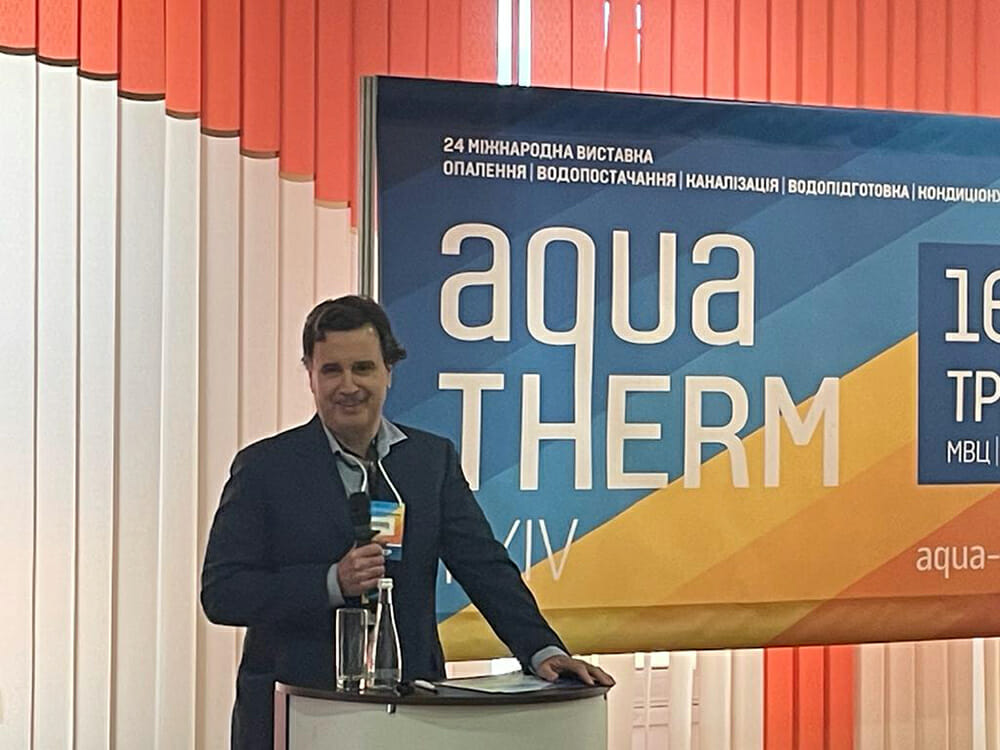
As an international businessman, I’ve spent much of my career traveling. Europe, Asia, South America, you name it. But for the past few years, I’ve been visiting Ukraine more and more, for both professional and personal reasons. I’ve seen much of the country, made friends, and witnessed first-hand the challenges facing Ukraine as it copes with ongoing Russian aggression. Currently, I’m traveling on an MOU for a modular building company that plans to establish a production facility there. As part of that work, I’ve presented at building conferences, spoken with local officials, and listened to the needs of residents in cities and towns across the country.
Here’s what I’ve learned so far.
A Country in Need of (Modular) Buildings
In Ukraine, many smaller cities have large apartment blocks in the center and small single-family homes surrounding. In the U.S., we’re not accustomed to small cities with such high density in the center. So, there are opportunities for both single-family and large multi-family buildings throughout the country.
And with over 2,300 damaged or destroyed schools, the potential for modular construction as part of the rebuilding effort is huge. In fact, mayors from several cities asked me about this exact issue when I visited in May. And, of course, the needs for medical clinics and housing are greater than ever.
In addition to rebuilding, however, there are several business parks in Ukraine that are in the planning stages: they’re looking for modular builders as partners, to build and to develop production facilities. With tax incentives and financing for construction costs, the opportunities for modular and other companies are increasing. In fact, while I am there this month, I am due to see a business park that will be developed into one of the largest in Europe. There will be athletic training facilities, logistics centers, manufacturing, workforce housing, commercial and retail development. The developers have made it clear that they want modular construction and container conversions to participate. And American companies are especially attractive to them due to the incredible brand that America has in Ukraine.
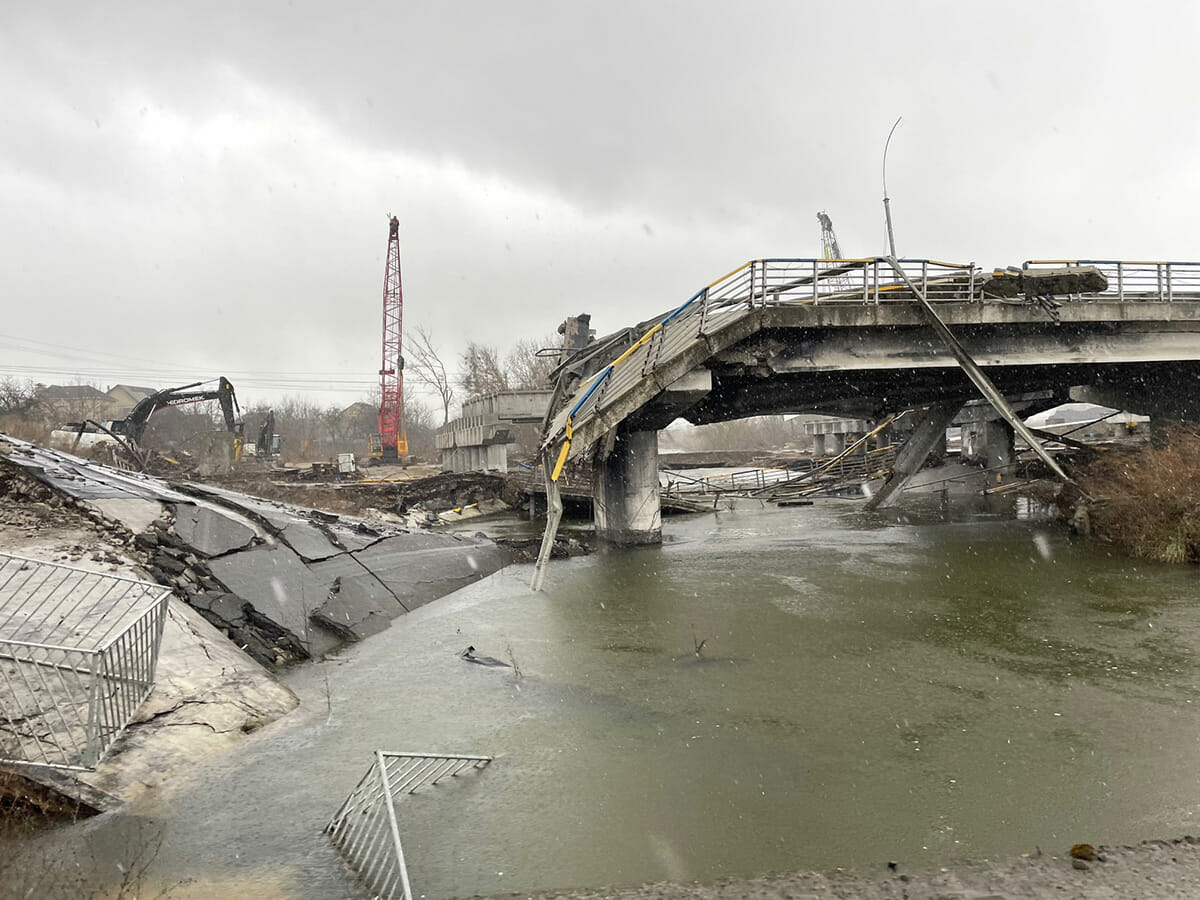
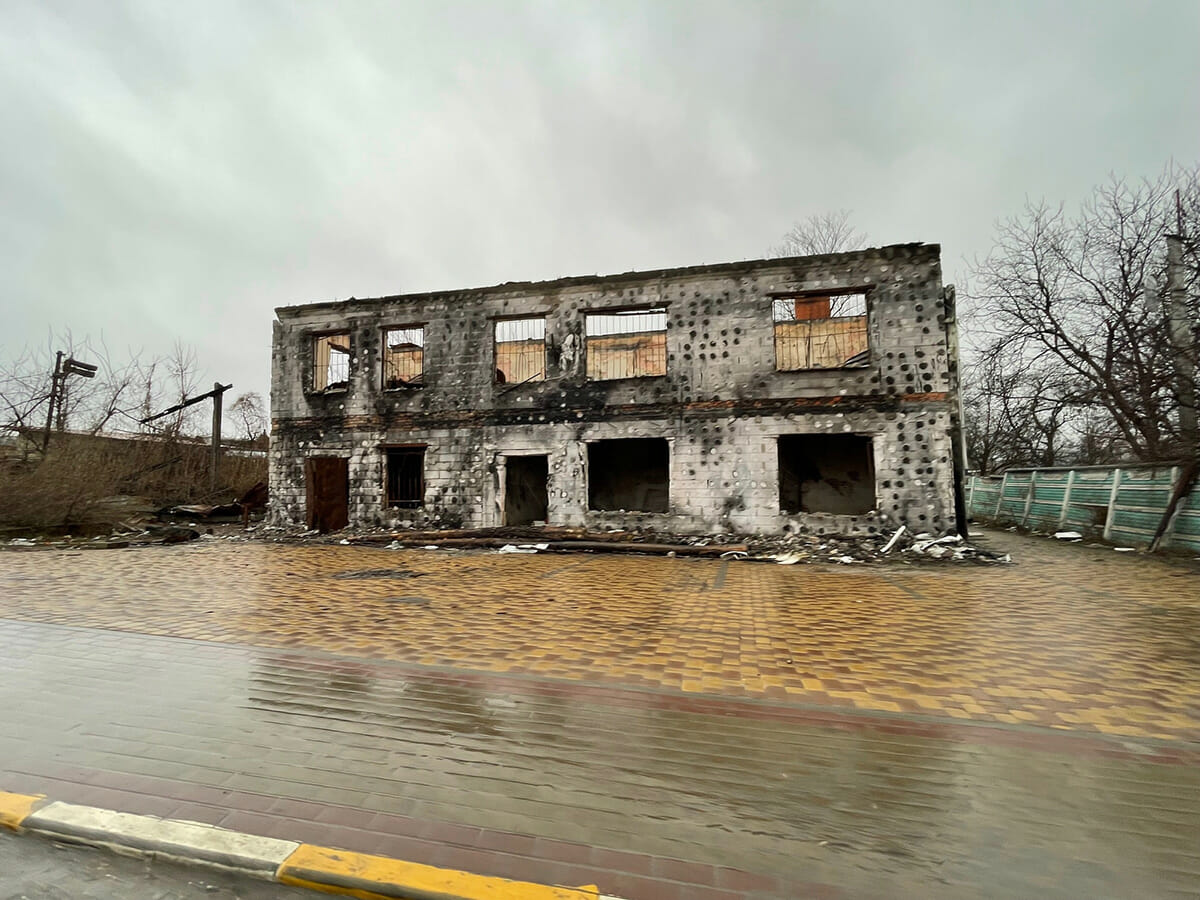
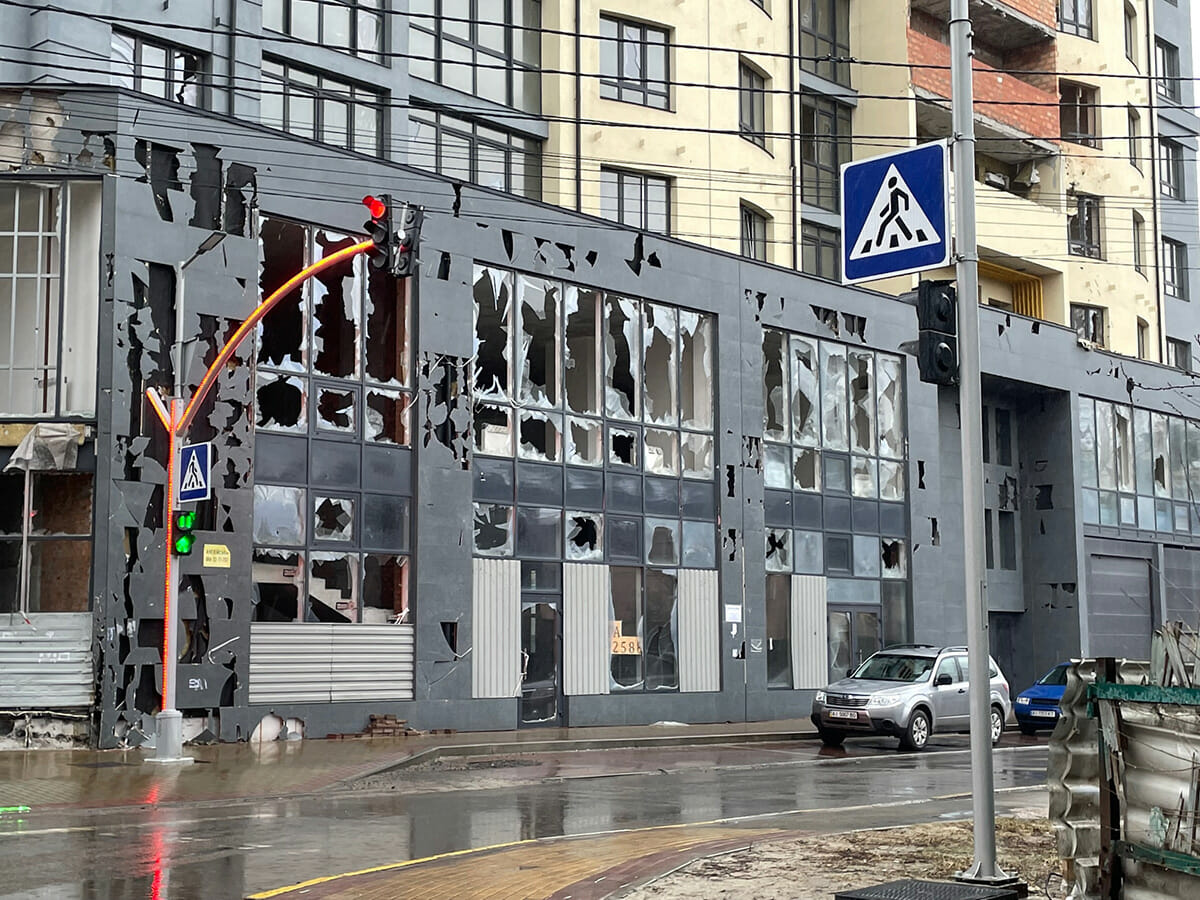
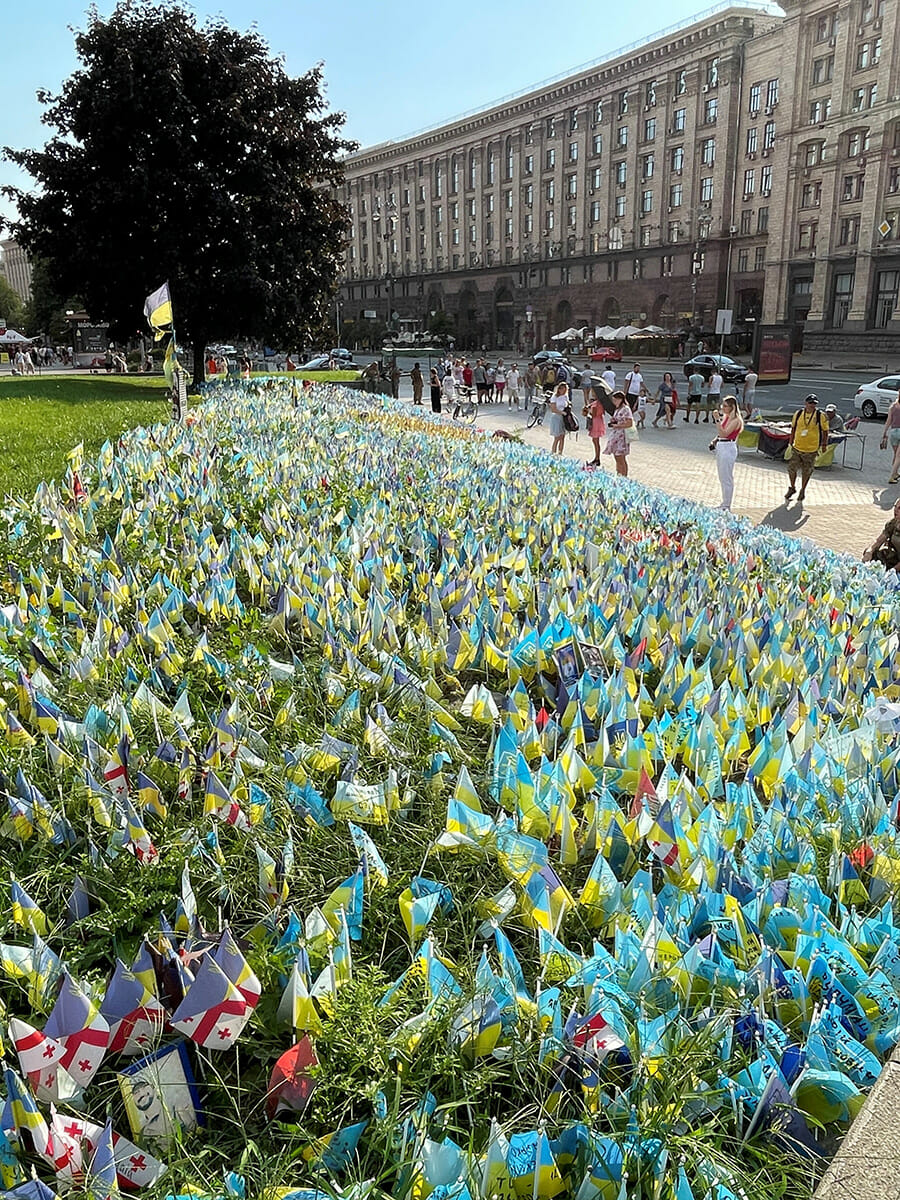
Damaged buildings and infrastructure are everywhere in Ukraine, and the opportunities for modular companies to get involved have never been greater. (Photos courtesy of Bruce Talley.)
There has been some rebuilding done, especially in places like Irpin and Bucha. Much of the damage there was to single-family homes and there has been donor money to help those people rebuild. Most are confident that the Russians will never come back to the area around Kyiv and they think that single family homes outside of Kyiv are low value target. There are some commercial projects underway, but the vast majority haven’t started.
I think the primary reason for much of the delay in rebuilding more is funding. Donor institutions and nations are more in the wait-and-see position than Ukrainians, who would like to roll their sleeves up and get started. They are aware that some places are more high risk than others and no place is really safe, so everyone recognizes that there are risks moving forward. Nevertheless, there has been some progress and some temporary housing put up for IDP. I know of several cities with outside funding from NGOs and charitable organizations that were developing plans for low-cost, temporary housing alternatives.
The Time To Start is Now
Although one company is already moving forward, there is room for several more modular companies in the business parks to get involved, so those with interest should contact me soon.
Also, I am continuing my discussions with national and city government about the benefits of modular construction. There was a lot of interest as a result of my presentations in May and I have been invited to speak to other mayors in Ukrainian cities. My network is growing. I have built credibility by regularly showing up, meeting people, and being part of the conversation. Also, I have seen the difference that being American makes.
Related Reading:
Enthusiasm for Modular Construction Grows in Ukraine as Rebuilding Efforts Take Shape
Bruce Talley, Chief Operating Officer at MBI member company OFC Incorporated, is trying ensure that Ukraine’s eventual rebuilding efforts are based in a technology known for its speed and adaptability: modular construction.
During his most recent visit to Ukraine, Talley was invited to share his knowledge of the industry at several building conferences. His first stop: KyivBuilds.
A Personal Plea
I care about what happens to Ukraine and my Ukrainian friends. After my years in Russia visiting Ukraine and all my trips there, I have an extensive network, both business and personal. I care about the outcome, and I am sure I will add value both for the Ukrainians and foreign, especially American, companies that learn about and use the opportunities. Truth be told, I haven’t been anywhere as pro-American as Ukraine is now.
I have a story that illustrates this. In March, I was in Kyiv and stopped in a pharmacy to buy a tea for my Russian-speaking wife. A man in the pharmacy heard my American accent, stopped me and we had a friendly and very short chat, because I was on the way to the train station. We exchanged information and when I was back in Kyiv in May, he invited me to his office and then his home, where I had dinner with him and his wife. After his talented grandson (their daughter’s teenaged son) played piano for us. They showed me pictures of their son, daughter-in-law, and granddaughter, who were living in occupied Ukraine, where they came from.
These people abandoned their home and business, which they rebuilt in Kyiv, and their family has been fractured. There are many worse stories of death, rape, and atrocities in Ukraine, everywhere. I have heard many; if you ask, you will hear them. But my new friends opened their home and lives up to me because they feel a strong emotional connection to the U.S. and Americans.
I hope that everyone who reads this will urge their elected officials to continue to support Ukraine and increase that support. It isn’t just important for my friend, but for more than 40 million Ukrainians, their neighbors in Moldova, Poland, and the Baltic States, too. And ultimately for the U.S. because the safety of our allies, their freedoms and markets are so important. I am sure that just as people in Normandy still appreciate the U.S., Ukrainians will be a close ally to the U.S. for a long time.
How I Can Help the Industry
I want to keep coming back to learn, participate, and add value. I feel an obligation to do my best. My reasons are not completely altruistic though. I know this will be a huge reconstruction project and my skills and deep knowledge will add value for the right partners. I love to be busy and in middle of activity and I am sure there will be a lot in Ukraine.
I have started a destination management company, like the ones I owned and built in Sochi and Rio de Janeiro. So, in addition to helping American and foreign companies find projects in Ukraine, my team in Ukraine is able to provide workforce relocation (complete with financial management of all contracts), legal support, transportation, accommodation, interpreters proficient in 9 languages, staffing, security, and locations throughout Ukraine. We can do this right now. You can find Destination Ukraine at www.destination-ukraine.com.
More from Modular Advantage
Mind the Gap: The Interface Between Onsite and Offsite Construction
Every design for manufacture and assembly (DfMA) project — modular, mass timber, or panelized — is really two projects joined at a seam. One is built in a controlled factory to millimeter tolerances; the other in the field, in weather, to the looser tolerances of poured concrete and human hands. Between them sits an interface: where the factory’s precision meets the site’s reality.
Rules, Rails & Repeatability: Applying DfMA to Modular Healthcare
DfMA offers several advantages for healthcare projects, with faster delivery among the most valuable. Schedule matters when building new facilities, expanding campuses, renovating existing space or bringing care closer to communities that need it.
Precision and Possibility: Demands of DfMA and What Modular Mass Timber Makes Possible
Mass timber does not automatically create an efficient modular building. Its precision makes early coordination more important: fabricated components will accurately reproduce both the team’s solutions and its mistakes. The material’s advantages are realized only when supported by an equally precise design and delivery process.
Catch It in the Factory, Not in the Field: Smarter Testing for Modular Builds
Integrating watertightness and airtightness testing into factory workflows transforms quality assurance from a reactive process into a proactive commissioning strategy. It ensures that every module shipped is field ready and resilient for transportation while also supporting the ability of the modular construction industry to make buildings better.
Modular Construction Contracts: Key Considerations for Successful Canadian Projects
Starting a modular project with a well-developed contract protects both the owner and the contractor. It will help keep the project on track and on budget, and it will improve quality from the factory floor to final installation on-site.
Modular by Design: Turning Architecture into a Manufacturing System
Modular construction is often presented as a faster way to build. Speed, however, is only one part of its value. The larger opportunity is to create a coordinated design and production system that improves quality, reduces uncertainty, and allows a building to move efficiently from concept design through manufacturing, transportation, installation, and completion.
Repeatability Begins with Trust: What Alora at Dry Creek Reveals About Scaling Modular Housing
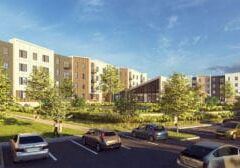
Alora at Dry Creek, a 329-unit, multifamily community comprising five four-story buildings in Centennial, Colorado, demonstrates how repeatable design, standardized manufacturing and early collaboration can work together to create a model that is not only faster to deliver, but easier to replicate across future projects.

T.R. Arnold: The Art of Third-Party Inspections
T.R. Arnold (TRA), a third-party inspection company in Elkhart, Indiana, contracts with modular manufacturers across the US. Manufacturers register with each state to which they intend to send their modules and may be required to hire a third-party inspection company.
Creating an ‘Ecosystem for Innovation:’ 50+ Years of Modular Construction Oversight in Virginia
Virginia’s modular building program began in 1973, with the implementation of the Virginia Industrialized Building Unit and Mobile Home Safety Regulations. Now it’s leading the country in modular code adoption.
Understanding Thermal Barriers Compliance Methods & Emerging NFPA-275 Foam Plastic Technologies
New fire barrier technologies are improving total costs and margins in major areas of construction, such as commercial, government, union and prevailing wage projects. These benefits translate into other large fringe areas, such as agriculture, commercial cold storage facilities, grow houses, outbuildings, military and aviation hangars.