
T.R. Arnold: The Art of Third-Party Inspections
In many states, modular units are inspected during and after manufacturing to certify that they have been built in accordance with local codes and quality standards. Third-party inspecting agencies are often contracted to perform these inspections.
Authority for third-party inspectors is determined by each state's regulations. Their responsibilities can include plan review, in-plant inspections, a combination of both, or none. They review each manufacturer's quality assurance program, and, when allowed, their production plans, focusing on completeness, as well as reviewing structural and energy calculations. In most cases, manufacturers are responsible for doing their own inspections at each production station and documenting any issues and their resolutions, but third-party inspectors audit these documents to ensure the proper sign-offs were performed.
T.R. Arnold (TRA), a third-party inspection company in Elkhart, Indiana, contracts with modular manufacturers across the US. Manufacturers register with each state to which they intend to send their modules and may be required to hire a third-party inspection company. In some states, multiple third-party inspectors may be used by the same manufacturer, while in others, only one is allowed. TRA has registered inspectors qualified in all states that have a modular program, most serving a particular region of states.
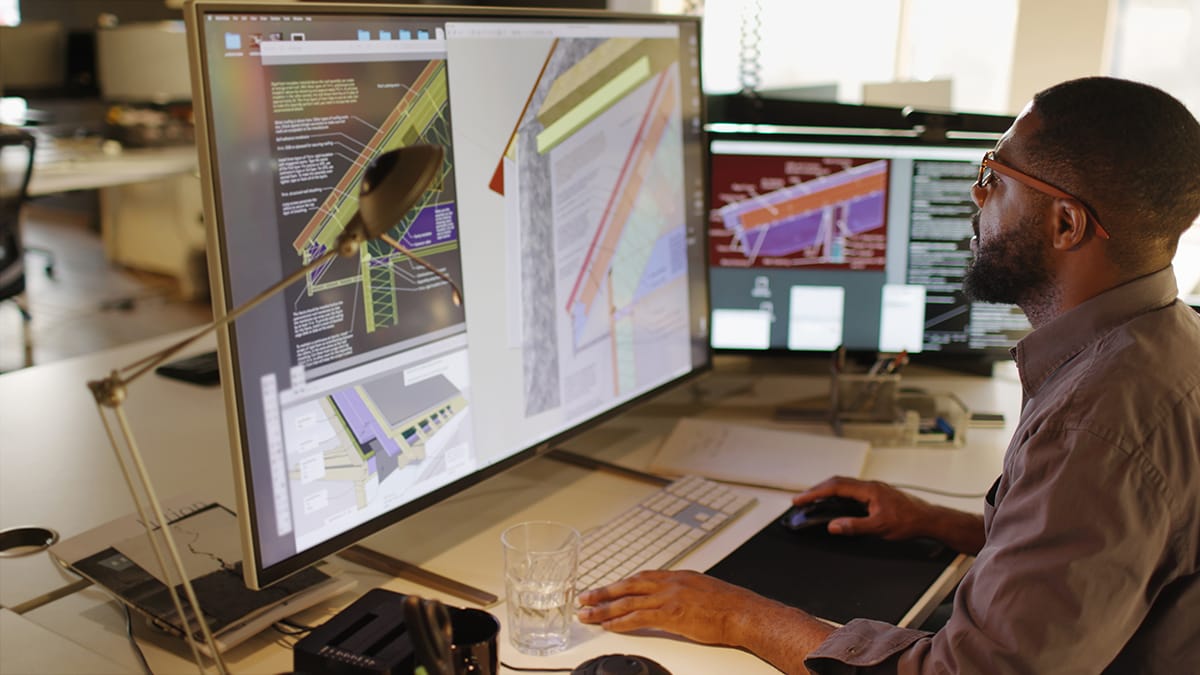
The goal for any third-party inspector is to gain confidence in a manufacturer’s competence and ability to meet the required standards and codes. When onboarding a new manufacturer, President Jeff Clouse and his team conduct a full production line inspection, reviewing every stage of construction and focusing on areas that will be covered by finishes or equipment. Final inspections are performed in addition to witnessing system tests, helping ensure the mechanical, electrical, and plumbing systems are functioning properly. As the manufacturer builds more modules and the inspectors are satisfied that they’re implementing their quality assurance processes correctly, the number of inspections may be reduced if allowed by state regulations. All units must be inspected at least once during construction. Certified modules are then affixed with an insignia indicating their compliance with local standards and codes.
State regulations can require additional visits. For instance, Florida requires inspections of all subsystems: electrical, plumbing, structural, mechanical, and thermal, which, for most manufacturers, can be accomplished with a rough-in and final inspection. Colorado also requires a minimum of a rough-in and final inspection. For Texas certification, the number of visits depends on how much work the manufacturer is doing for the state. “If they’re doing a unit at least every six months, I can operate in a reduced capacity. But if they only build one a year, I must go in with increased frequency and perform a rough-in and final inspection so that I’m seeing the production in at least two phases.”
Clouse said he often has to review state regulations with manufacturers. “It really helps to take the manufacturer back to the regulations and read it with them so we’re on the same page. It helps them get a better feel for why we’re looking at some of the units more than with other states.”
T.R. Arnold’s inspectors are truly jacks of all trades, as they are combination inspectors who work with both commercial and residential units and have passed the building, mechanical, electrical, and plumbing tests. In traditional construction, different inspectors are assigned to each discipline, so a project may have four or five people reviewing the work.
The Key is Communication
Similar to traditional construction, modular construction often suffers from miscommunication. One of the most common issues during in-plant inspections is working off the wrong set of drawings. Manufacturers work off production drawings, which don’t always match the approved construction drawings, especially if last-minute changes have been made. “A lot of times, there will be last-minute changes to the production set that aren't included in the approval documents,” said Clouse. Ultimately, any changes to the design must be considered in the formal approval process.
Limiting the number of changes would go a long way to alleviating this issue, said Clouse, but even he realizes it’s “probably not a realistic expectation.” Last-minute changes directly affect the production schedule, delaying final approval on units.
Another challenge involves dealing with personnel changes in each jurisdiction and how regulations are interpreted by those taking over. “With the turnover of managers at state and local jurisdictions, it requires constant education on what the regulations require. For example, if a new regulator comes in who doesn’t have the hands-on experience the previous administrator had, they often ask our clients or us for things we didn’t have to provide before, but that the regulations now require. Sometimes we have to educate them about where those pieces of information are included within our client’s drawing sets.”
State requirements can vary widely, meaning TRA’s team must stay ahead of any changes. Clouse said Texas is particularly voluminous in their documentation requirements, adding additional paperwork to the overall process, some of which is duplicated in other documents. Other states, such as Kentucky and Michigan, require additional documentation before TRA can issue its label.
Clouse hopes that eventually every state will adopt the ICC/MBI 1205 standard, as this would make things more efficient for both inspectors and the regulatory bodies who review their work.
Clouse welcomes the changes to the inspection requirements in the ICC/MBI 1200 and 1205 standards. “It hasn’t changed anything for us as a third party; however, it has raised the barrier to entry for newer third parties because of the accreditation requirement. This is a welcome change for us because it’s best for the industry to have a uniform method of enforcement.”
As part of meeting standard 1205, TRA is accredited through ISO/IEC Standard 17020:2012, which drives many of its processes and documentation, and requires a company review every two years.
Most of TRA’s work comes from referrals, either from satisfied clients or state building agencies. Clouse said price isn’t the major factor for most manufacturers when selecting a third-party inspector. “It’s more about how quickly and accurately you can approve a project and complete your inspections.”
A Small Team with Big Reach
Clouse’s 38-year modular career began in the summer between his junior and senior years of high school, when he worked as a draftsman for a nearby modular manufacturer. He was hired full-time after graduating and spent 20 years in similar roles for different manufacturers. When the local manufacturing industry slowed in 2007, he was hired by T.R. Arnold to do drafting for recreational vehicle projects and has worked there for 18 years. After seven years with the company, he became President.
TRA covers a lot of ground with a team of 21 inspectors, 18 of whom can perform both plan review and in-plant inspections. Their regional inspectors sometimes have to travel outside their area to cover customers elsewhere, most of which are located in the eastern two-thirds of the US. They also have a small office staff to handle typical administrative functions. They regularly serve an average of 200 clients a month.
Clouse said that one change he wishes he could make is to allow regional inspectors to serve multiple inspection agencies simultaneously, thereby reducing travel expenses for manufacturers. “If third-party inspection agencies could use the same regional inspector to perform services, it would reduce the inspector travel load and costs to the clients because we’re not pulling inspectors from one region to serve in another region.” The difficulty in doing this lies in sharing an employee and overhead costs.
While TRA is headquartered in Indiana, it has a worldwide reach, serving all of North America, Europe, and Asia. It’s employee-owned and has been in business since 1967.
About the Author: Dawn Killough is a freelance construction writer with over 25 years of experience working with construction companies, subcontractors and general contractors. Her published work can be found at dkilloughwriter.com.
More from Modular Advantage
MBI Town Halls 2026: Reflections from Boston
By the end of 2026 MBI’s Government Affairs team will have traveled over 6,000 air miles to bring Town Hall events to five different cities in two countries.

Mind the Gap: The Interface Between Onsite and Offsite Construction
Every design for manufacture and assembly (DfMA) project — modular, mass timber, or panelized — is really two projects joined at a seam. One is built in a controlled factory to millimeter tolerances; the other in the field, in weather, to the looser tolerances of poured concrete and human hands. Between them sits an interface: where the factory’s precision meets the site’s reality.
Rules, Rails & Repeatability: Applying DfMA to Modular Healthcare
DfMA offers several advantages for healthcare projects, with faster delivery among the most valuable. Schedule matters when building new facilities, expanding campuses, renovating existing space or bringing care closer to communities that need it.
Precision and Possibility: Demands of DfMA and What Modular Mass Timber Makes Possible
Mass timber does not automatically create an efficient modular building. Its precision makes early coordination more important: fabricated components will accurately reproduce both the team’s solutions and its mistakes. The material’s advantages are realized only when supported by an equally precise design and delivery process.
Catch It in the Factory, Not in the Field: Smarter Testing for Modular Builds
Integrating watertightness and airtightness testing into factory workflows transforms quality assurance from a reactive process into a proactive commissioning strategy. It ensures that every module shipped is field ready and resilient for transportation while also supporting the ability of the modular construction industry to make buildings better.
Modular Construction Contracts: Key Considerations for Successful Canadian Projects
Starting a modular project with a well-developed contract protects both the owner and the contractor. It will help keep the project on track and on budget, and it will improve quality from the factory floor to final installation on-site.
Modular by Design: Turning Architecture into a Manufacturing System
Modular construction is often presented as a faster way to build. Speed, however, is only one part of its value. The larger opportunity is to create a coordinated design and production system that improves quality, reduces uncertainty, and allows a building to move efficiently from concept design through manufacturing, transportation, installation, and completion.

Repeatability Begins with Trust: What Alora at Dry Creek Reveals About Scaling Modular Housing
Alora at Dry Creek, a 329-unit, multifamily community comprising five four-story buildings in Centennial, Colorado, demonstrates how repeatable design, standardized manufacturing and early collaboration can work together to create a model that is not only faster to deliver, but easier to replicate across future projects.

Creating an ‘Ecosystem for Innovation:’ 50+ Years of Modular Construction Oversight in Virginia
Virginia’s modular building program began in 1973, with the implementation of the Virginia Industrialized Building Unit and Mobile Home Safety Regulations. Now it’s leading the country in modular code adoption.
Understanding Thermal Barriers Compliance Methods & Emerging NFPA-275 Foam Plastic Technologies
New fire barrier technologies are improving total costs and margins in major areas of construction, such as commercial, government, union and prevailing wage projects. These benefits translate into other large fringe areas, such as agriculture, commercial cold storage facilities, grow houses, outbuildings, military and aviation hangars.